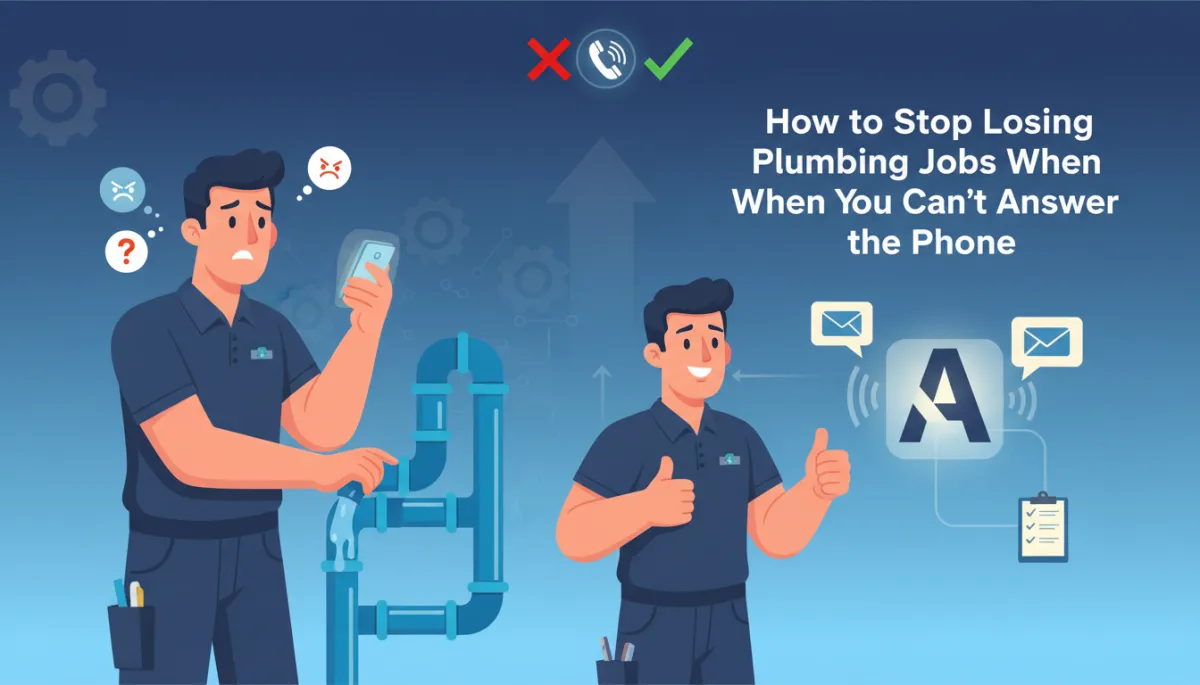
How to Stop Losing Plumbing Jobs From Missed Calls
Plumbing, Small Trades Business
How to Stop Losing Plumbing Jobs When You Can’t Answer the Phone
When you work alone, the same pair of hands has to do everything – fixing leaks, driving between jobs and dealing with new enquiries. That makes it very easy to miss calls. The problem is that every missed call could be a job you never even hear about. This guide looks at why unanswered calls matter so much for self‑employed plumbers in the UK, and some practical ways to stop good work slipping through your fingers.
Why missed calls often mean missed jobs
Most people ring a plumber when they already have a problem. They are not browsing for fun. They want someone who can help, and they usually want that person quickly. If their call rings out or goes to an unclear voicemail, many will simply try the next number on Google or the fridge magnet on their boiler.
It is not that they dislike you or your business. They just do not know you yet. All they see is “no answer”. In that moment, another plumber who does pick up – or at least gives a clear response – looks more reliable. By the time you ring back, they may already have booked someone else, especially for smaller jobs and emergencies like leaks, blocked toilets or no hot water.
Over a week or a month, those lost chances add up. A few missed calls a day could mean several decent jobs a week that never even reach you. You have done nothing wrong on the tools, but your phone handling makes you look unavailable, even when you would happily have taken the work.
First step: be honest about when you can answer
Before you spend money on any solution, it helps to be realistic about your day. If you are under a sink, up a ladder or in a customer’s living room, you probably cannot stop mid‑job to chat to a new caller. That is perfectly normal. The goal is not to glue the phone to your ear. The goal is to make sure callers feel acknowledged and know what will happen next, even when you cannot pick up in person.
Option 1: Set clear voicemail expectations that sound professional and human
A proper voicemail message costs nothing and is better than a blank tone or the default mobile message. The key is to make it sound like a real business, explain why you cannot answer and tell callers what will happen if they leave a message. Keep it short, friendly and clear. For example:
“Hello, you have reached John at XYZ Plumbing. I am probably on a job or driving. Please leave your name, number, location and a quick note about the problem. I return calls between 12–1pm and after 5pm, Monday to Friday.”
This kind of message sets expectations. Some callers will still move on, but others will be happy to wait because they know when to expect a response. The downside is that many people do not like leaving voicemails, and some emergencies will not wait until your next callback window. Still, as a minimum, a clear voicemail is worth doing and makes you sound more organised than silence or a mumbled message recorded years ago.
Option 2: Return calls quickly – even if it is a two‑minute chat
The faster you return a missed call, the more likely you are to win the job. You do not need a long conversation. Often a quick call back to say “I have seen your call, I am just finishing a job and can talk properly in an hour” is enough to stop the customer ringing around further. It shows you are responsive and respectful of their time, even if you cannot solve the problem immediately.
One simple habit is to build callback blocks into your day. For example:
Check missed calls and texts before you start your first job.
Have a 15–20 minute slot around lunchtime for quick callbacks.
Do one last round of callbacks at the end of the day.
The upside is that this approach is free and keeps you in control of every conversation. The downside is that it still relies on you spotting the missed calls, having the time and remembering to ring back. On busy days, especially during winter breakdown season, it is easy for numbers to slip down the call list and disappear.
Option 3: Use call forwarding to a second phone or trusted person
Another route is to forward unanswered calls to someone else. This might be a partner, a family member or a part‑time helper who can take basic details when you are tied up. Most UK mobile networks allow you to forward calls after a set number of rings, or when your phone is busy or switched off. It usually only takes a few settings changes to turn this on and off.
This can work well if you have someone reliable who understands your business and is happy to answer the phone during the day. They do not need to be an expert plumber. They just need to be polite, ask the right questions and pass on clear information. However, it can also create pressure if that person has their own job, childcare or other commitments. You may also feel uncomfortable mixing personal and business calls on the same device or asking a relative to deal with stressed‑out customers in the evening.
Option 4: Backup phone answering support for missed and forwarded calls
If voicemail and personal call forwarding still leave gaps, a more reliable option is to use a backup phone answering service. In simple terms, you keep your usual mobile number, but when you cannot answer – or choose not to answer – calls are picked up by a receptionist. They greet the caller in your business name, take down key details and send them to you, usually by text and email. You then respond when you are free, without the caller feeling ignored at the first attempt.
The main benefit is consistency. Someone answers every call, 24/7 if you want that, and every enquiry is written down for you. There is no need to rely on strangers leaving voicemails or family members remembering to text you the address. It can also make your business feel more established, even if you are a one‑person operation working from a van and a mobile phone.
The trade‑off is cost and control. You pay a monthly fee, and the receptionist will usually follow a set script rather than giving technical advice. For most self‑employed plumbers, that is a positive thing – you stay in charge of pricing, availability and job selection – but it is worth understanding exactly what the service will and will not do before you sign up.
Honest comparison: which option suits a one‑person plumbing business?
Clear voicemail only – cheapest and quick to set up. Better than nothing, but you will still lose people who do not like leaving messages or who are in a hurry. Works best for plumbers with a steady, non‑urgent client base and fewer emergency calls.
Fast callbacks – very effective if you are disciplined. You keep full control of every conversation and can filter out time‑wasters. The risk is that on busy or stressful days, callbacks slip and customers move on before you reach them.
Call forwarding to a friend or family member – can work if you have someone reliable who is happy to help. Costs little, but can strain relationships and may not be sustainable long‑term, especially as your workload grows or call volumes increase in winter.
Professional phone answering support – most consistent for capturing every enquiry and writing down the details. You pay a fixed amount, but you do not need to manage anyone or train an office worker. Best for plumbers who want to look after customers properly but cannot justify hiring staff.
There is no single right answer. Many sole traders start with a better voicemail and callback routine, then add professional support once they see how many calls come in during busy periods. The important thing is to choose a setup you can actually maintain, not a perfect system that falls apart after a few weeks.
How Top Rank Trades handles missed and forwarded calls for you
Top Rank Trades was built specifically for UK tradespeople who want more genuine enquiries without hiring office staff. One part of the service is a hands‑off telephone receptionist that deals with calls you miss or choose to forward. You keep working on the tools while callers still feel looked after from the first ring.
When a call is answered by the receptionist, they collect four key pieces of information:
The caller’s name.
Contact details – usually a phone number and, if given, an email address.
Their location, such as postcode or area, so you know if the job is in your patch.
The nature of the enquiry – for example, leaking pipe, new bathroom, boiler service or emergency call‑out.
Those details are then sent straight to you by text and email. You do not log into a dashboard or learn complicated software. You simply receive a clear summary you can act on when you have a spare moment. You stay in full control: Top Rank Trades does not give quotes, promise prices, book appointments or transfer calls. Only you decide which jobs to take and when you can attend.
The phone receptionist is part of a wider system that also helps with website enquiries and customer reviews, but you can treat it as a simple, reliable way to make sure new callers are greeted properly instead of hitting a dead tone. If you want to understand the wider features, including phone answering support for UK trades, you can explore more when you have time.
What it costs and how to decide if it is worth it
The complete Top Rank Trades service costs £95 per month. That includes the 24/7 telephone receptionist for missed and forwarded calls, website chat to capture enquiries and automated review requests that help build your local reputation. There are no extra bits of software you need to manage and no need to connect calendars or run campaigns yourself. The idea is to keep things simple so you can get on with the work you are paid for.
Whether it makes sense for you depends on your typical job value and how many calls you miss. If a single boiler swap, unvented cylinder or bathroom refit comfortably covers a month’s fee, then capturing even one or two extra jobs could pay for the service. On the other hand, if you are semi‑retired, only take on occasional work or rarely miss calls, a simple voicemail and disciplined callback routine may be enough for now. The aim is to be realistic rather than chase every possible enquiry at any cost.
Practical next steps to stop losing plumbing enquiries
Rewrite your voicemail today so it sounds clear, friendly and specific about when you call people back.
Build two or three callback slots into your daily routine and stick to them for a couple of weeks.
Keep a simple record – even just a notebook – of how many calls you miss and how many turn into jobs once you return them.
If you are still losing enquiries because you cannot answer quickly enough, consider whether call forwarding to a trusted person or a professional receptionist service would take the pressure off.
However you do it, the aim is simple: make sure that when someone in your area needs a plumber, their first call to you feels answered, not ignored. That alone can be the difference between a quiet diary and a steady stream of decent local work.
See how it could work in your own business
If you would like to see how Top Rank Trades might handle your missed and forwarded calls, website enquiries and reviews, you can try it without any pressure. Get your free personalised demo at https://topranktrades.co.uk/live-demos and decide for yourself whether £95 per month is good value for the type of work you want to win.
